At a Glance
A gallery wall of city map posters turns a blank wall into a visual story. This guide covers five proven layouts (symmetrical grid, salon style, horizontal line, triptych, and staircase), size and spacing recommendations, harmonious theme combinations, and practical installation tips.
Why City Map Posters Are Perfect for a Gallery Wall
A gallery wall groups multiple frames on a single wall to create a cohesive composition. The usual challenge is finding pieces that work together without looking mismatched.
City map posters solve this problem naturally. Every map shares the same visual structure — a network of streets, typography, cartographic framing — while remaining unique through the city it depicts. A wall of framed city maps reads as a unified ensemble at first glance, unlike a random mix of photos and prints.
And every map carries meaning. Your gallery wall will not just look good — it will tell your story.
Five Layouts for Your Gallery Wall
1. The Symmetrical Grid
All frames are the same size, aligned in even rows and columns. The effect is graphic and contemporary.
- Number: 4 to 9 posters, same format
- Format: 16x20 inches (40 x 50 cm / about 16 x 20 in) — gallery standard, easy to frame uniformly
- Spacing: 5 to 7 cm (2 to 3 in), identical in both directions
- Frames: strictly identical
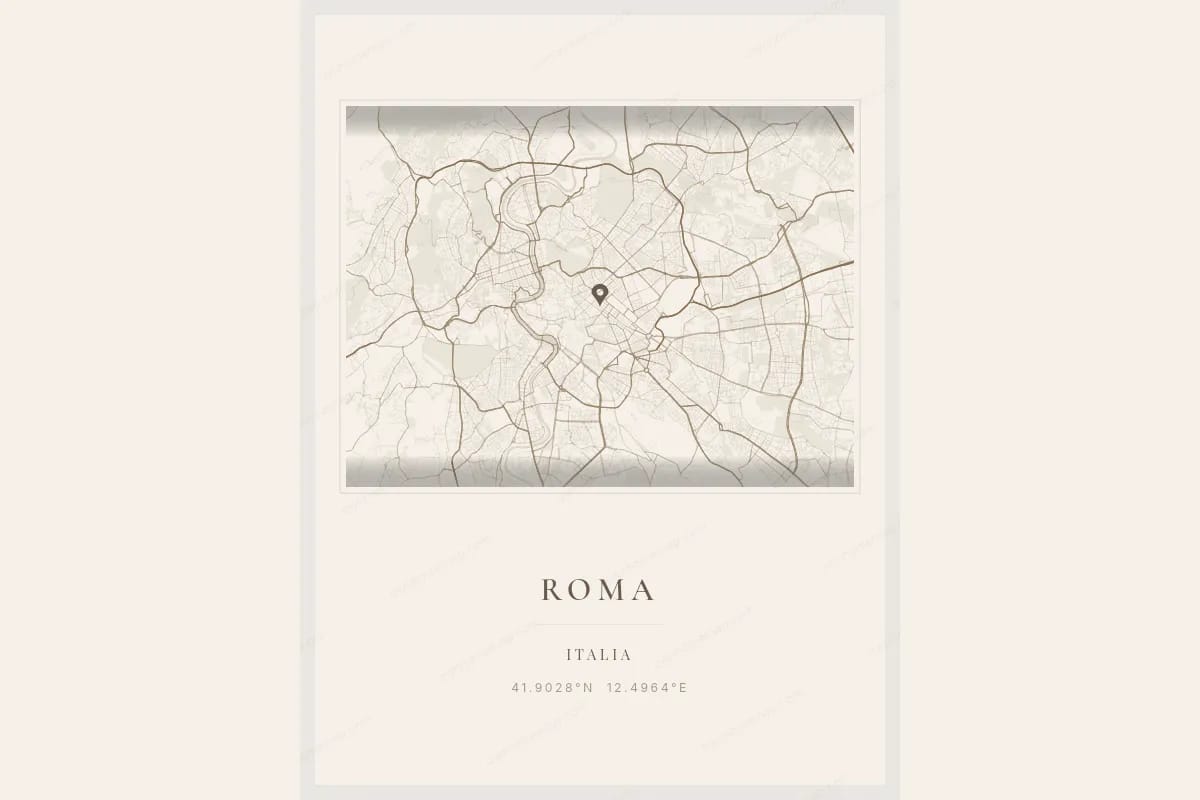
- Theme: A single theme across all maps. Noir (black background, white streets) or Warm Beige (sepia on cream) deliver the best results in a grid
2. Salon Style
Different-sized frames arranged asymmetrically around a central point. Relaxed, dynamic, and easy to expand over time.
- Number: 5 to 8 posters, mixed formats
- Format: One centerpiece in A2 or 18x24 inches, surrounded by 16x20-inch and US Letter pieces
- Spacing: 4 to 6 cm (1.5 to 2.5 in) — tighter spacing creates a sense of togetherness
- Frames: may vary slightly (black and natural wood), within the same color family
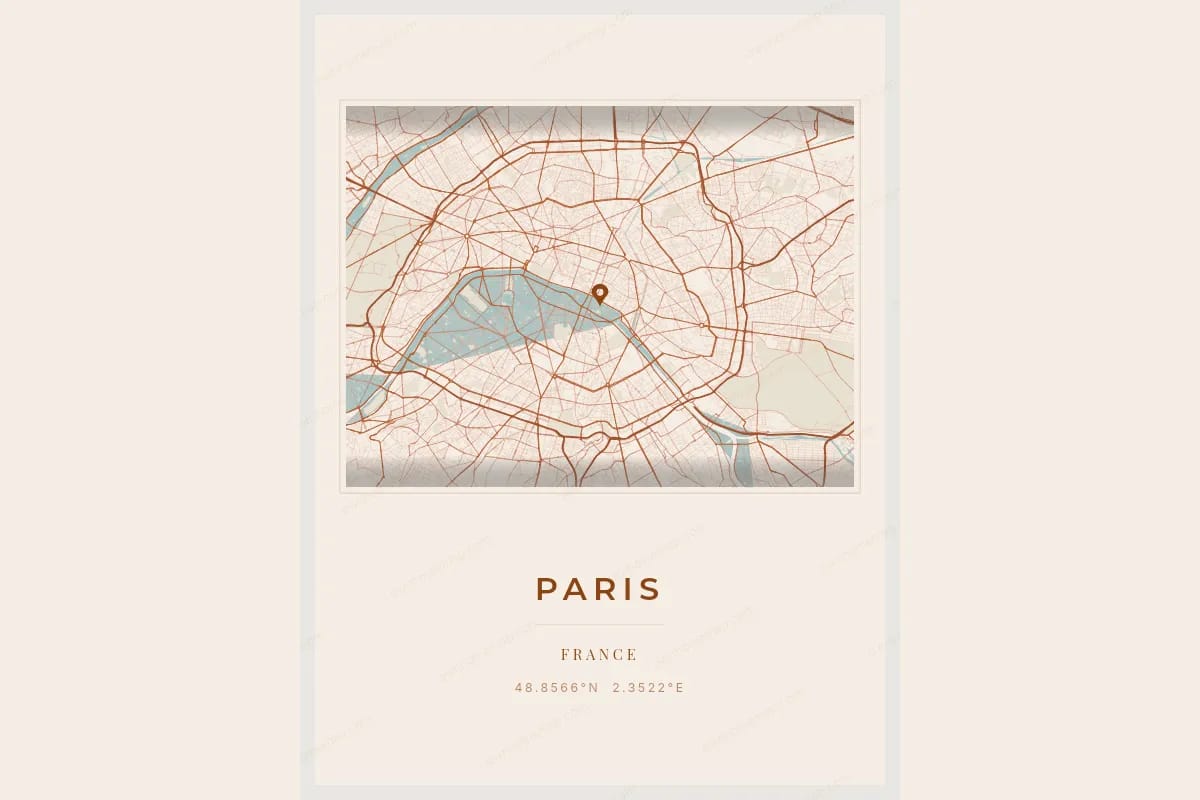
- Theme: Combine two related themes: Terracotta + Warm Beige (warm tones) or Japanese Ink + Pastel Dream (light tones). Avoid mixing a very dark theme with a very light one
3. The Horizontal Line
All frames aligned on a single row at the same height. Ideal for long, narrow spaces: above a bed, along a hallway, above an entryway console.
- Number: 3 to 5 posters, same size
- Format: 16x20 inches or US Letter
- Spacing: 8 to 10 cm (3 to 4 in) — more generous to let each map breathe
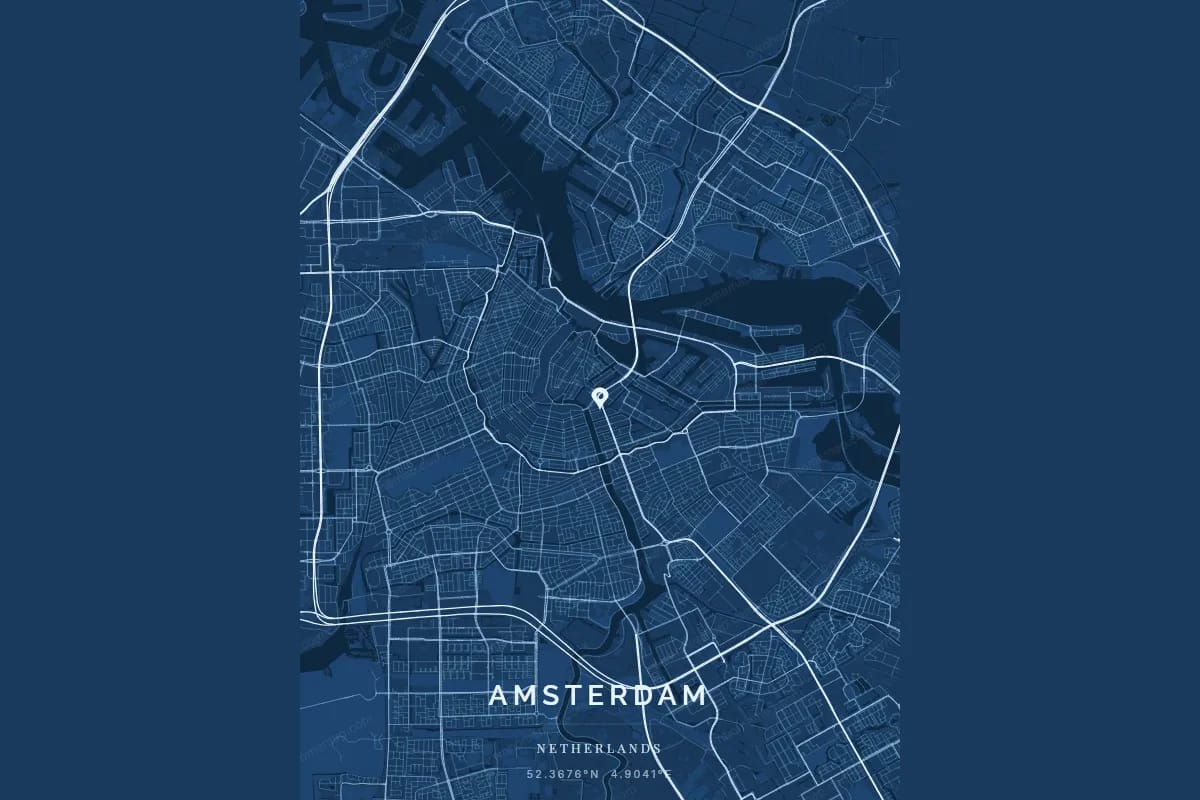
- Theme: A single theme. Blueprint (deep blue, light lines) creates a remarkable continuous frieze effect
4. The Triptych
Three maps, three cities, three moments. The most narrative layout: where you were born, where you studied, where you live.
- Number: 3 posters, same format
- Format: A2 for maximum impact, or 16x20 inches for a more modest wall
- Spacing: 5 to 8 cm (2 to 3 in)
- Alignment: same horizontal line, or center piece slightly higher
- Theme: A single theme, non-negotiable. Midnight Blue (navy background, golden streets) gives a luxurious feel. Copper Patina brings understated elegance. Noir remains a safe bet
5. The Staircase
Frames follow the slope of the railing and climb with the steps. A natural chronological journey: start at the bottom and move forward in time.
- Number: 4 to 7 posters
- Format: Same size — US Letter or 16x20 inches. Uniformity prevents visual clutter in an angled space
- Spacing: 6 to 8 cm (2.5 to 3 in)
- Alignment: frame centers on a line parallel to the slope, 150 cm (59 in) above the steps
- Theme: A single theme. Emerald or Forest work well in bright entryways. Noir or Midnight Blue suit interior staircases
Tell a Story with Your Maps
A gallery wall of city map posters gains power when it follows a narrative thread.
The life timeline. Birth city, university city, the city where you met your partner, wedding city, current city. Each frame is a chapter. Visitors read your story on the wall.
The love story. First date, first getaway, the proposal, the wedding, the city where you are building your life together. A memorable wedding anniversary gift.
The family tree, geographically. Each family member picks their most meaningful city. The wall becomes a cartographic family portrait.
The journeys that shaped you. Only the cities that changed you — not every vacation. This curation gives the wall an intention that goes beyond decoration.
Matching Colors with Your Interior
White or cream wall. Every theme works. Dark themes (Noir, Midnight Blue) create striking contrast. Light themes (Warm Beige, Pastel Dream) produce a softer effect.
Colored wall. Choose a theme that does not clash with the wall color. On a sage green wall, Copper Patina blends naturally. On a deep blue wall, go with Noir for contrast — too much blue kills the blue.
Gray wall. Warm themes (Terracotta, Warm Beige) warm up the space. Cool themes (Blueprint, Monochrome Blue) reinforce a sleek, understated mood.
Frames. Look at your furniture. Light wood pieces: natural oak frames. Metal-and-glass interiors: matte black frames. The frame is the bridge between the city map poster and the room.
Practical Installation Tips
Paper templates. Cut sheets of paper to the dimensions of each frame. Stick them to the wall with repositionable tape. Live with this mock-up for a day before drilling. This step is the difference between an amateur result and a professional one.
Measure twice, drill once. Mark the center of each template with a pencil. Use a spirit level to check alignment. Gaps of a few millimeters show, especially in a grid.
Start from the center. Hang the centerpiece or the largest piece first, then build outward.
The height rule. The center of your composition should sit 150 cm (59 in) from the floor. Above a sofa or bed, raise it 15 to 20 cm (6 to 8 in) above the backrest.
Plan for growth. If you intend to add more maps later, leave room on one side. Salon style is the easiest layout to expand.
Themes That Work Together
- Graphic wall: Noir — striking in a grid or triptych, fits any modern interior
- Warm wall: Terracotta + Warm Beige — earthy tones that pair effortlessly in salon style
- Elegant wall: Midnight Blue — navy background and golden streets, luxurious in a triptych with gold frames
- Bright wall: Japanese Ink + Pastel Dream — light background and delicate lines, ideal for a bedroom or office
- Nature wall: Emerald or Forest — deep greens, striking alongside wooden furniture
- Bold wall: Copper Patina or Blueprint — strong personality, best in a triptych or horizontal line
Create Your Gallery Wall
Start by listing the cities that matter to you. Choose a layout that fits your space. Pick a theme (or two related ones) that harmonizes with your interior. Cut templates, test, adjust, then hang.
Create your city map posters on OwnHomeMap — choose your cities, themes, and formats to build the perfect gallery wall.
FAQ
How many posters do I need for a gallery wall?
A minimum of three posters is enough for a triptych or horizontal line. For a grid, plan for four to nine pieces. Salon style works well from five frames onward. What matters is that each map represents a meaningful city — three carefully chosen maps beat eight picked just to fill a wall.
Can I mix different themes on the same gallery wall?
Yes, as long as you stay within the same tonal family. Combine light themes together (Japanese Ink + Pastel Dream + Warm Beige) or dark themes together (Noir + Midnight Blue). For a triptych or grid, stick to a single theme — uniformity strengthens visual cohesion. Check our framing guide to harmonize your frames as well.
What size should I choose for a gallery wall in a small space?
US Letter (21.6 x 27.9 cm / 8.5 x 11 in) is ideal for smaller walls. You can create a 2x2 grid in US Letter within a space less than 80 cm (31.5 in) wide. For a narrow hallway, a horizontal line of three US Letter prints with 8 cm (3 in) spacing takes up roughly 85 cm (33.5 in). Find all available formats in our size guide.
Ready to capture your special moment?
Create a personalized city map poster in minutes.
Create my poster — from €12.00